
Building AI Agents
From LLM to AI agents
Alex Avdiushenko
October 8, 2026
AI Agent Applications
Knowledge & Productivity
- Personal assistants for research and decisions
- ChatGPT, Perplexity, Gemini
Action & Execution
- Browser agents that navigate, click, fill forms
- Developer agents such as Claude Code and Codex
Business & Interaction
- Customer support across channels
- Operations automation and follow-up
Interactive Worlds
- Game NPCs with adaptive behavior
- Context-aware dialogue and quests
 OpenAI
 Perplexity
 Google
 Anthropic
 Unity
Unity
The Evolution of Human–LLM Interaction
| Interaction | Description | Pattern example |
|---|---|---|
| Prompting | LLM output has no impact on program flow | process_llm_output(llm_response) |
| Router | LLM determines the basic control flow | if llm_decision(): path_a() else: path_b() |
| Tool Calling | LLM selects the function and arguments | run_function(llm_chosen_tool, llm_chosen_args) |
| Multi-step Agent (Autonomous Agent) | LLM output controls iterations and continuation of program execution | while llm_should_continue(): execute_next_step() |
| Multi-Agent System | One agent process can trigger another agent process | if llm_trigger(): execute_agent() |
What Is an AI Agent?
OpenAI Agents SDK presentation:
An agent is an AI application consisting of
- a model equipped with
- instructions that guide its behavior,
- access to tools that extend its capabilities,
- encapsulated in a runtime with a dynamic lifecycle.
Lilian Weng (rejoin OpenAI in July 2026 after about 2 years in Thinking Machines Lab) , LLM Powered Autonomous Agents [1]:
Agent = LLM + memory + planning skills + tool use
What Is an AI Agent?
Agent = runtime( AI model + prompts + tools + memory + guardrails + planning skills )
Autoregression

Source: Hugging Face Agents Course
Softmax Temperature


LLMs: Key Takeaways
LLMs operate on tokens (including special ones), not words or meaning
- Billing and context limits
- Prompt structure and context formatting matter
LLMs predict the next token based on probabilities
- temperature
- hallucinations
- We automate everything that can be automated
- And we AI-ify everything that can't
Strengths:
- Language tasks (summarization, paraphrasing, text/code generation)
- Structured reasoning patterns, tool use, file/table processing
Limitations:
- Precise algorithmic/symbolic tasks
- Up-to-date knowledge (post-training events)
- Long multi-step planning and persistent memory
Many limitations can be mitigated in agents using tools and memory.

A few tasks to solve (15-20 min)
What is "agent"?
-
An "intelligent" system that interacts with some "environment"
- Physical environments: robot, autonomous car, ...
- Digital environments: DQN for Atari, Siri, AlphaGo, ...
- Humans as environments: chatbot
- Define "agent" by defining "intelligent" and "environment"
- It changes over time!
- Exercise question: how would you define "intelligent"?
What is "LLM agent"?
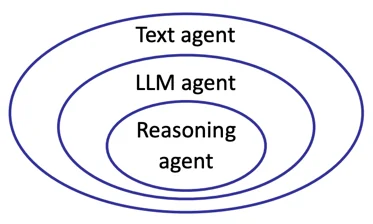
- Level 1: Text agent
- Uses text action and observation
- Examples: ELIZA, LSTM-DQN
- Level 2: LLM agent
- Uses LLM to act
- Examples: SayCan, Language Planner
- Level 3: Reasoning agent
- Uses LLM to reason and act
- Examples: ReAct, AutoGPT
- The key focus of the field and the talk
A brief history of LLM agents
- Reasoning
- CoT (Chain of Thought)
- Zero-shot CoT
- Self-consistency
- ...
- Acting (Grounding, tool use, etc.)
- Game
- Robotics
- RAG (Retrieval-Augmented Generation)
- ...
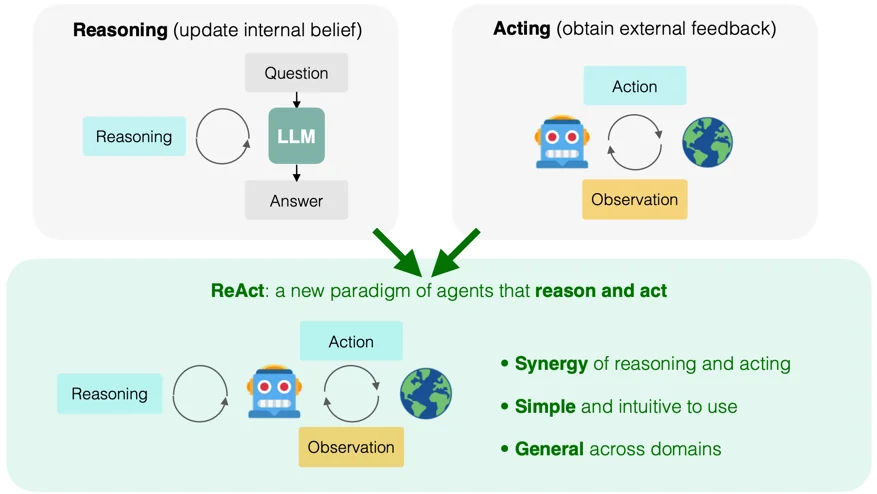
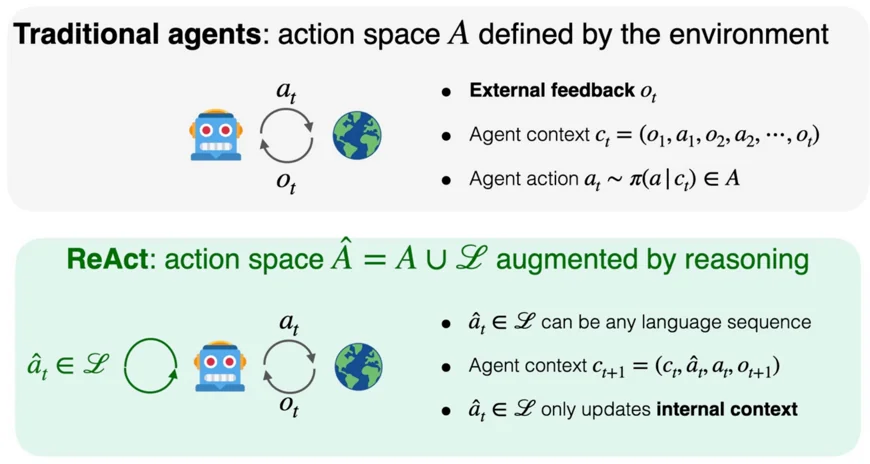
- $\to$ LLM agent (but not reasoning agent) evolves into ReAct (Reasoning + Acting)
- New apps/tasks/benchmarks:
- Web browsing
- Software engineering (Junie)
- Scientific discovery (Deep Research)
- ...
- New methods:
- Memory, learning, planning, multi-agent...
RAGs
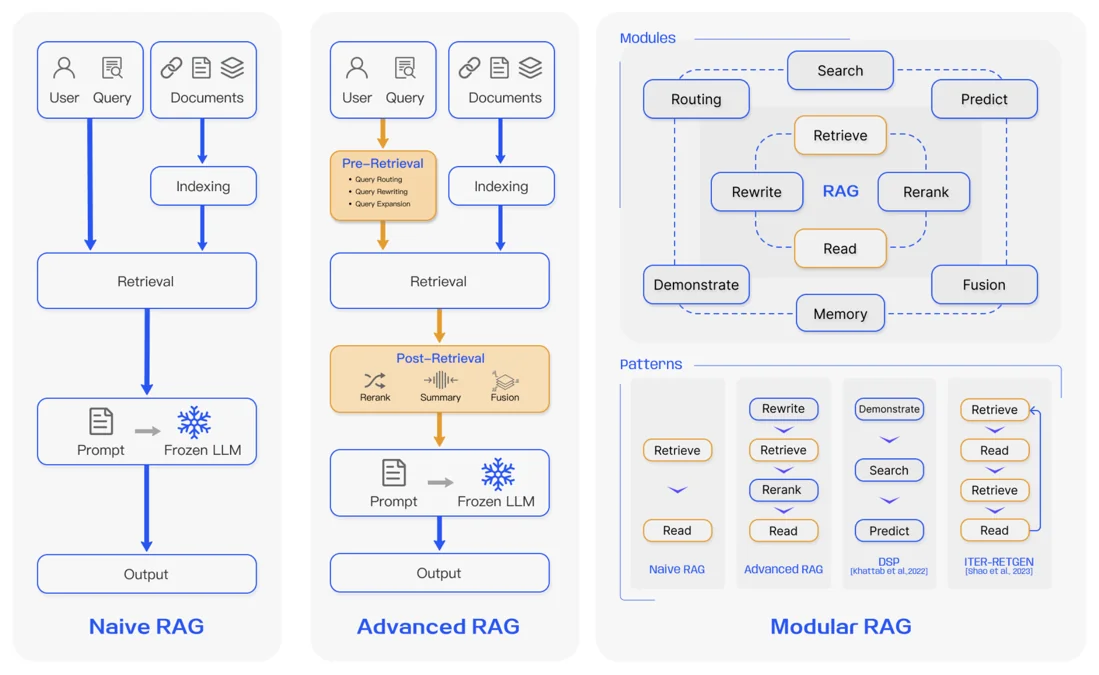
Reasoning OR Acting
CoT
Reasoning Traces $\rightleftarrows$ LM
- Flexible and general to augment test-time compute
- Lack of external knowledge and tools
RAG/Retrieval/Code/Tool use
Actions $\rightleftarrows$ LM $\rightleftarrows$ Env
- Retrieval
- Search engine
- Calculator
- Weather API
- Python
- ...
- Lack of reasoning
- Flexible and general to augment knowledge, computation, feedback, etc.
Source: LLM Agents MOOC, Fall 2024
Source: LLM Agents MOOC, Fall 2024
ReAct is general and effective
| (NLP tasks) | (RL tasks) | ||
|---|---|---|---|
| PaLM-540B | HotpotQA (QA) |
FEVER (fact check) |
ALFWorld (Text game) |
| Reason | 29.4 | 56.3 | N/A |
| Act | 25.7 | 58.9 | 45 |
| ReAct | 35.1 | 64.6 | 71 |
Let's talk about..
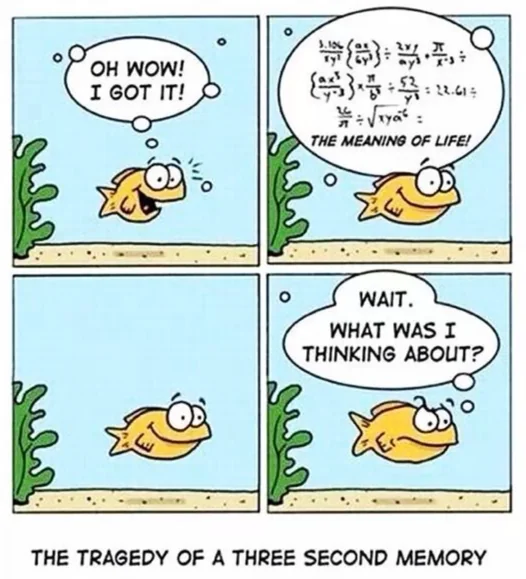
So we need a long-term memory
- Read and write
- Stores experience, knowledge, skills, ...
- Persists over new experience
Code-based controller
Instruction: ...
Thought: ...
Action: ...
Observation: ...
Thought: ...
...
Programming Task Reflection
- Task: Given two strings of parentheses, determine if they are balanced
- Trajectory:
def match_parens(lst): ... - Evaluation:
- Internal or external evaluation: Self-generated unit tests fail: the function only checks if the counts of parentheses are equal but ignores their order
- Reflection: The function is wrong because it only counts the parentheses, but the order matters for valid balancing
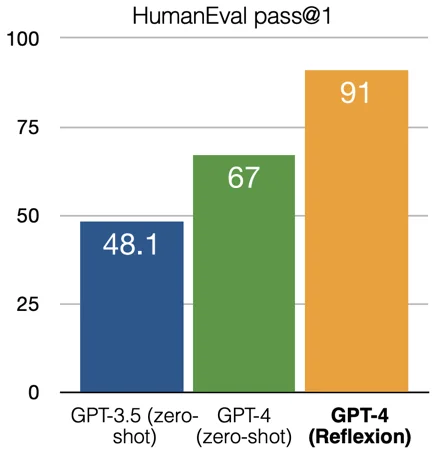
- $\to$ Next Trajectory
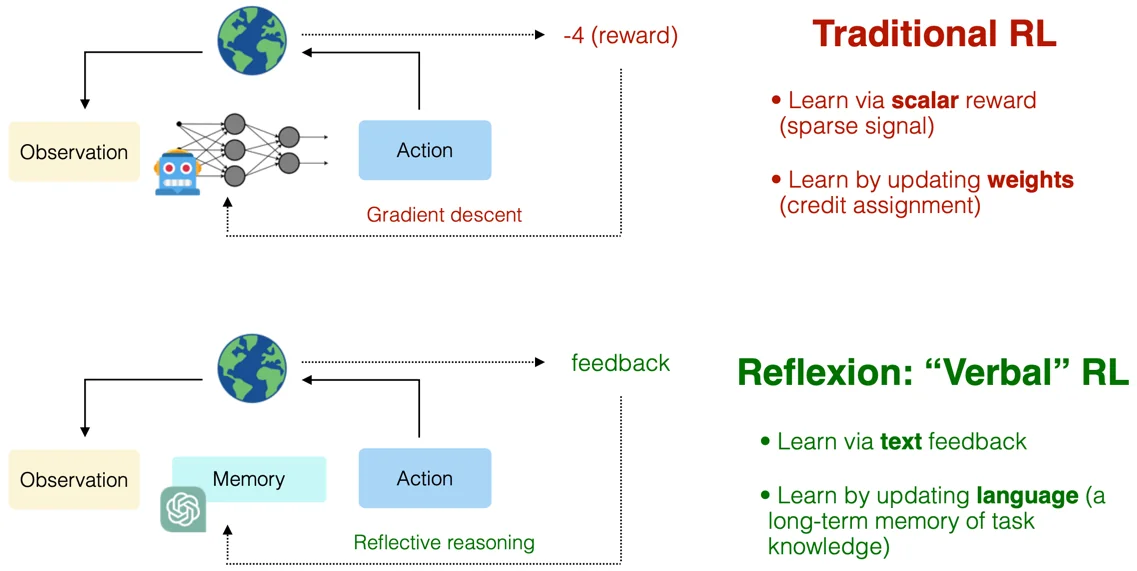
Source: LLM Agents MOOC, Fall 2024
Semantic memory of (reflective) knowledge
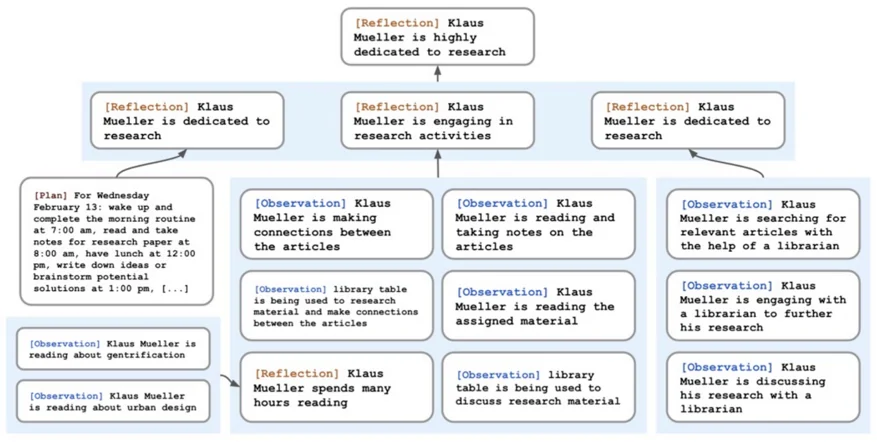
Cognitive Architectures for Language Agents (CoALA)
- Memory
- Action space
- Decision making
Exercise Questions
- What distinguishes external environment VS internal memory?
- What distinguishes long VS short term memory?
Observation $\to$ (what "language"?) $\to$ Action
Symbolic AI Agent: 1960 - 1990
sp {blocks-world*opsub*proposal*clear}
(state <s> ^name blocks-world ^desired <d*1> ^clear <dobject>
<ontop2>)
^bottom-block <object>
(Deep) RL Agent: 1990 - 2020
[-0.3432, 2.444, 0.34342, ...
0.4545, 0.443, 3.34234]

LLM Agent: 2020 - now
Let’s think step by step…
The room is dark, so I need a
lamp, the lamp is in
bedroom, so I should ...
Symbolic state or neural embedding
- Intensive efforts to design or train
- Task-specific, hard to generalize
Open-ended natural language
- Rich priors from LLMs
- Inference-time scalable
- General and generalizable
How to evaluate LLM agents?
WebShop (2022)
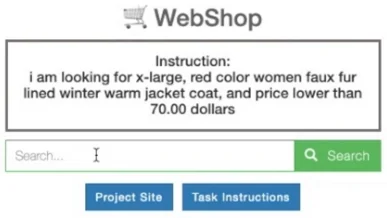
- Large-scale complex environment based on 1.16M Amazon products
- Automatic reward based on instruction and product attribute matching
- Challenges language and visual understanding, and decision-making
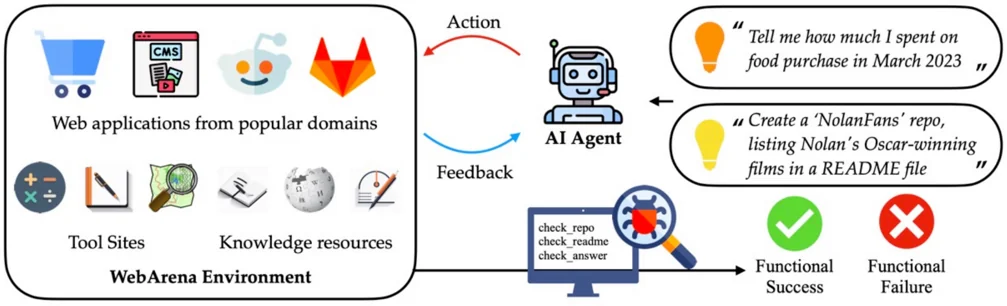
Web Arena (2023)
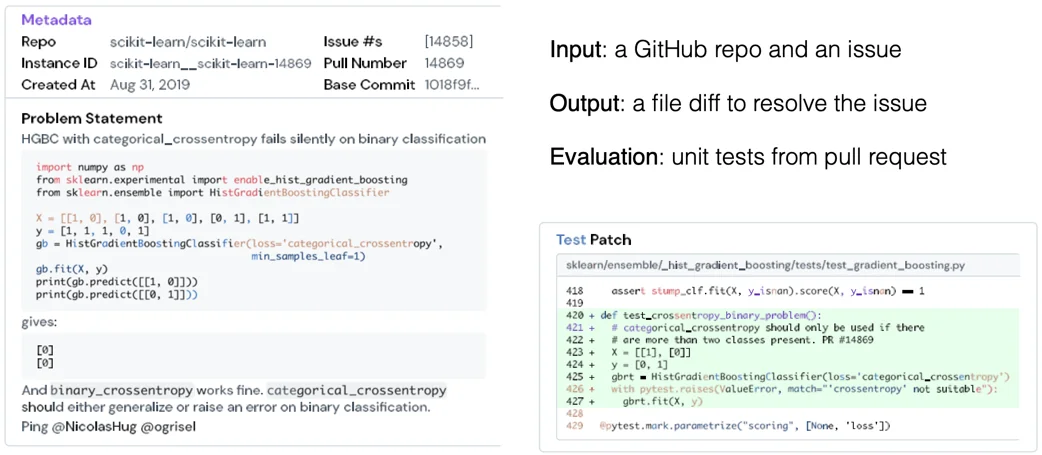
SWE-Bench (2023)
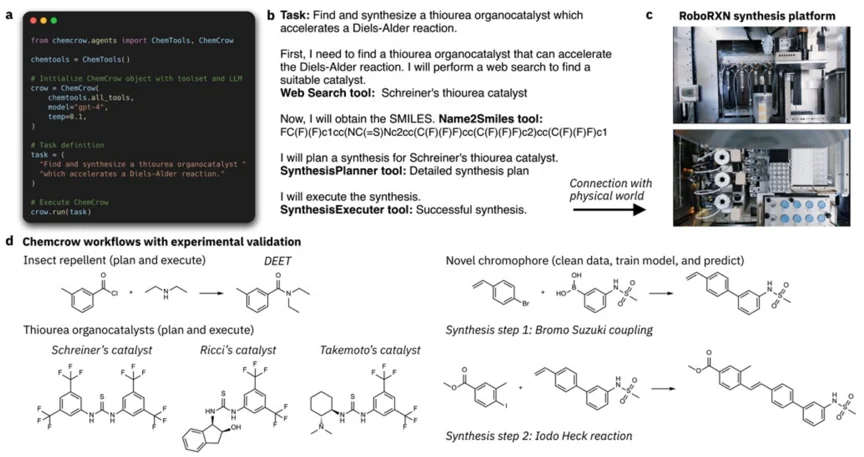
ChemCrow: ReAct enables discovery of a novel chromophore
What's Next?
Training
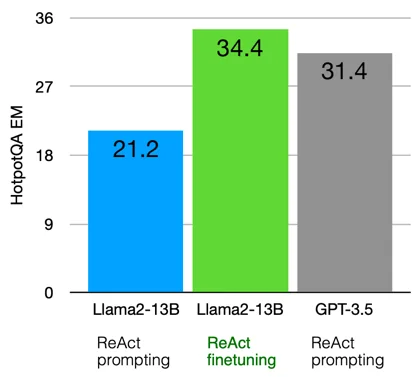
FireAct: Toward Language Agent Fine-tuning
Interface
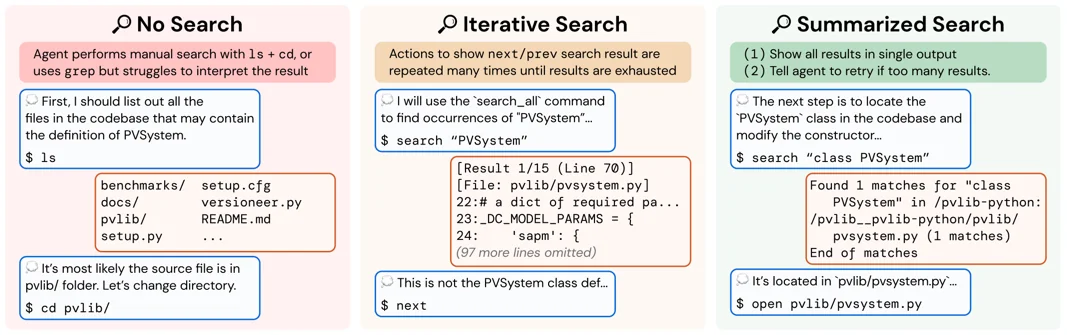
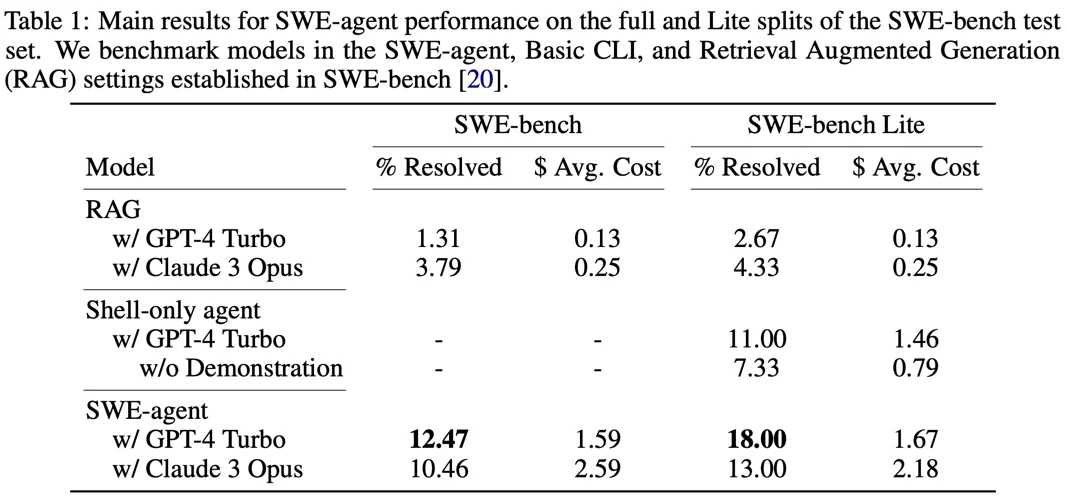
SWE-agent: Agent-Computer Interfaces Enable Automated Software Engineering
Robustness
Human
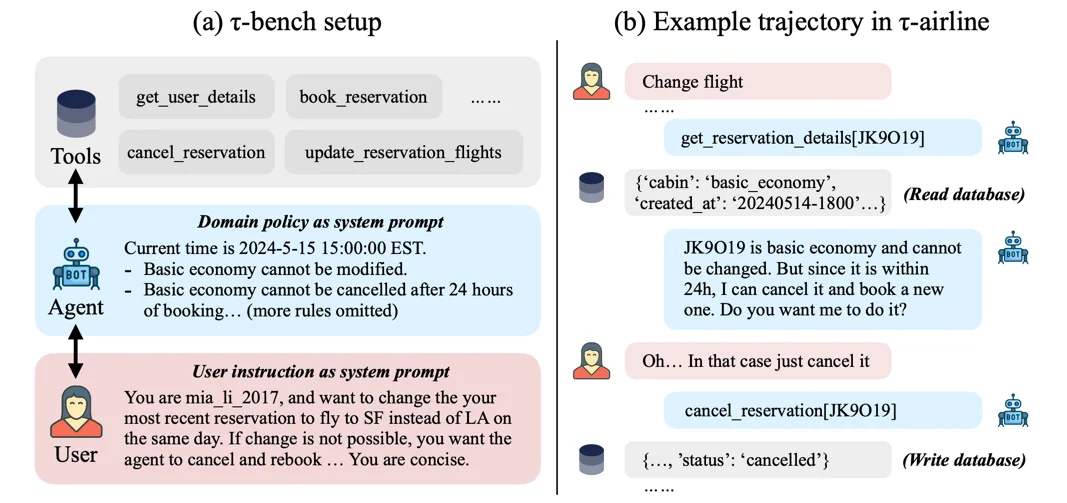
$\tau$-bench: A Benchmark for Tool-Agent-User Interaction in Real-World Domains
Benchmark
FireAct: Training LLM for agents
Establish model-agent synergy:
- Improve "agent capabilities" like planning, self-evaluation, calibration
- Open-source agent backbone model
- Next trillion tokens for model training
SWE-agent: Agent-Computer Interfaces Enable Automated Software Engineering
LLMs and Humans are Different, So Should Their Interfaces
- e.g., humans have smaller short-term memory, so they have to trade off time for space
ACI Design Can Help Us
- Better solve tasks (without changing the agent)
- Better understand agents (vs. humans)
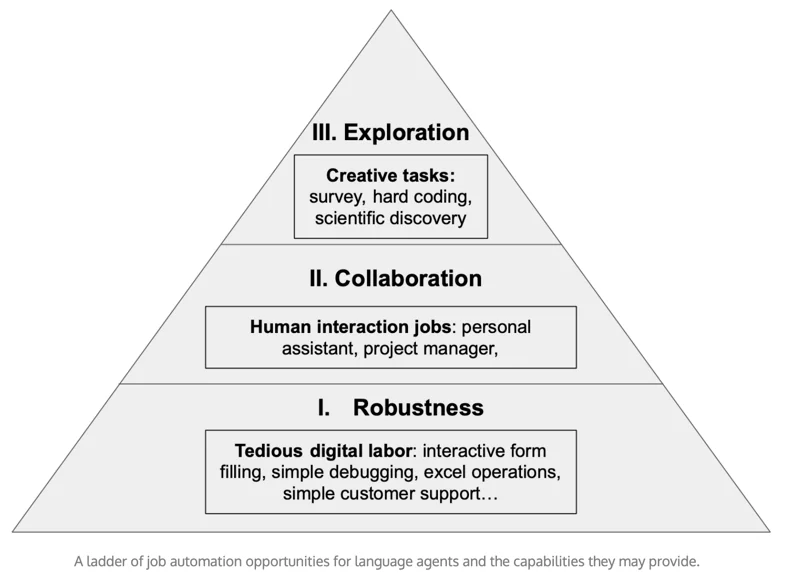
Human in the loop needs robustness
- You need to solve Riemann hypothesis once (one time out of millions)
- But you always need to buy tickets correctly
Practice
Notebooks for this intensive:
Summary
-
LLM Agents Overview
- LLM agents are goal-oriented systems using language models for reasoning and acting
- ReAct combines reasoning and action, improving performance across multiple tasks
- Challenges: Tool integration and improving autonomous planning
-
CoT vs RAG
- Chain of Thought (CoT) focuses on internal reasoning traces, lacking external tools
- RAG augments LLMs by connecting them with external knowledge, feedback, and computation tools
-
Reflection & Long-term Memory
- Reflection and self-evaluation improve task-solving abilities over iterations
- LLM agents need long-term memory to store and update experience persistently
-
Future of LLM Agents
- Training improvements via models like FireAct
- Interfaces tailored for human-agent collaboration (SWE-agent)
- Robustness and evaluation benchmarks such as TAU-bench and WebShop